
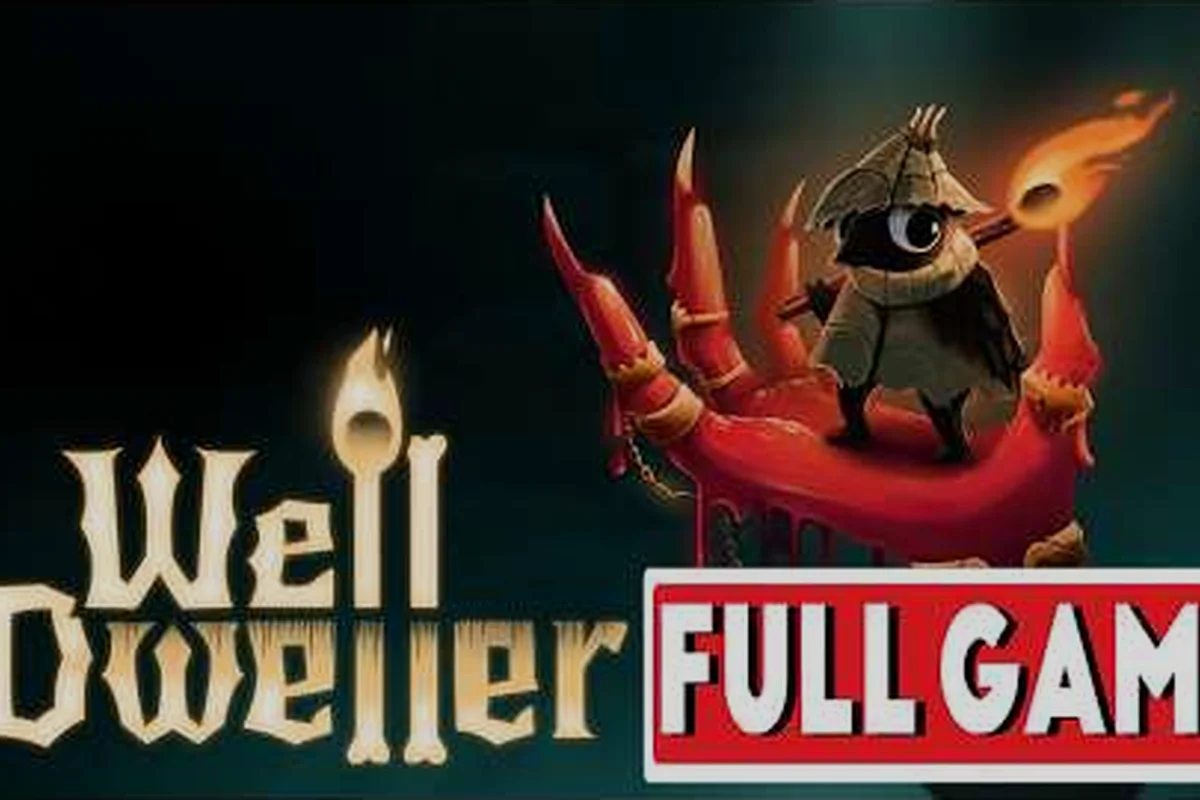
Curious how Well Dweller closes its dark fairy-tale loop without spoiling a single beat? This spoiler-free ending guide walks you through the final act's emotional register, runtime feel, and credits scene tone so you can decide when to stop reading. You will get a structural preview of the ending's meaning, the witch's bargain lore implications, and the visual language of the credits — all kept vague enough to protect first-time players. If you are weighing whether to look anything up before rolling credits, this is the safe pass.
What This Spoiler-Free Ending Preview Actually Covers
The goal here is to give you a guided map of Well Dweller's closing chapters without naming a single reveal. Instead of walking through specific plot beats, we focus on what players consistently describe in the first hours after launch: how the story pacing shifts, what tonal register the final sequence sits in, and what the credits scene visually communicates about the broader lore. According to community data from the launch window, most first-time players finished the main arc in roughly 9 to 12 hours, and the ending itself is treated as a quiet, contemplative coda rather than a high-action set piece. This makes a spoiler-free preview genuinely useful — you can calibrate expectations without losing any of the impact.
| Spoiler-Free Element | What It Means in Well Dweller | Why It Matters to First-Time Players |
|---|---|---|
| Tone of the final sequence | Reflective, mournful, with moments of warmth | Sets the emotional weight of the credits scene |
| Approximate runtime of the closing act | Roughly 45 to 90 minutes depending on exploration | Helps you budget a comfortable play session |
| Pacing of the credits scene | Slow, image-led, with minimal dialogue | Lets the story breathe before the epilogue beat |
| Player sentiment at the end | Bittersweet, fairy-tale reverent | Frames the meaning of the ending as thematic rather than twist-driven |
The phrasing of this guide deliberately avoids naming characters, bosses, locations, or specific plot reversals. If you have not yet breached the final area, the language below should feel like fog — directional, but with shapes obscured. If you have finished, the same language will read as a retrospective framing rather than a reveal.
The Three Zones of the Closing Act
Players who have completed Well Dweller describe the final stretch as falling into three overlapping zones. The penultimate area introduces environmental cues that the kingdom is responding to your actions earlier in the game — burnt patches regrowing, broken paths reconnecting, and NPC dialogue shifting toward finality. The queen's quarters approach ramps tension through visual storytelling rather than enemy density, which is a deliberate contrast to the combat-heavy midgame. The credits scene then shifts to a slow, almost storybook cadence that ties the fairy-tale framing back into the foreground.
This three-zone structure is what gives the ending its distinctive pacing. Where many metroidvanias use the closing hours to escalate combat difficulty, Well Dweller uses them to escalate emotional clarity. The witch's bargain lore, hinted at across dozens of story pages and trinket descriptions, finally surfaces in the ambient details of these final rooms rather than in a single exposition dump. The Well Dweller lore guide covers how the bargain theme threads through the earlier acts, which is helpful context for appreciating how the closing sequence pays those threads off.
How the Credits Scene Signals the Ending's Meaning
The credits scene is the most discussed portion of the ending among launch-window players, and for good reason — it is where the meaning of the ending gets visually unpacked. Rather than recapping plot beats, the credits sequence leans on the fairy-tale book motif that runs through the game. You see illustrated pages cycling through the characters you befriended, the beasts you tamed, and the places you relit, all rendered in the same muted palette that the in-game story pages use.
| Credits Scene Visual | Thematic Implication | Player Takeaway |
|---|---|---|
| Storybook page illustrations | Frames the journey as a tale being told, not a record of events | Reinforces the fairy-tale self-awareness baked into the writing |
| Slow crossfades between images | Suggests continuity rather than conclusion | Hints that the kingdom's story continues past the player's role |
| Ambient music swell | Echoes the matchstick motif from Glimmer's first scene | Closes the musical loop on the protagonist's core verb |
| Final lingering frame | Holds on a single image for several seconds | Implies that the last beat is a thematic statement, not a plot twist |
The reason players respond strongly to this structure is that it treats the credits as story content rather than as housekeeping. You are not being thanked for playing — you are being shown a coda. According to the official Well Dweller Steam page, the game is positioned as a dark fairy-tale metroidvania about a tiny bird with a matchstick, and the credits scene is the most literal expression of that framing. It is the moment the game stops being a metroidvania and becomes a bedtime story about itself.
The Witch's Bargain as a Background Lens
The witch's bargain lore is the thematic spine of the entire game, and the ending handles it with characteristic restraint. Rather than spelling out the bargain in dialogue, the closing sequence uses environmental storytelling — a motif here, a piece of set dressing there — to let observant players assemble the implication on their own. This is why the ending rewards a second playthrough even when you already know the broad strokes. The bargain is referenced, not revealed.
The bargain is also why the story analysis community has settled on the framing of the ending as a "reversal of terms" rather than a "victory." The credits scene deliberately does not show a triumphant kingdom, and it deliberately does not show a clean moral lesson. What it shows is the bargain's cost being paid in a way that the player character is allowed to witness but not to undo. The Well Dweller story pages lore guide traces how the bargain is foreshadowed across the game's collectible books, which is the cleanest path to reading the ending's emotional register correctly.
What First-Time Players Should Know Before the Final Act
A spoiler-free guide is only useful if it tells you things that genuinely change how you experience the ending. Below is a practical checklist of structural facts that you can hold in your head without losing any narrative impact. None of these are reveals — they are pacing and tone notes that the game itself communicates in its first 30 minutes, just not in the same explicit form.
| Pre-Final-Act Note | What You Already Know From the Gameplay | How It Frames the Ending |
|---|---|---|
| Glimmer's matchstick fuels both combat and exploration | The fire is the protagonist's defining verb | The credits scene echoes this verb musically |
| Story pages are collectible lore items | The game is interested in how stories get told | The ending leans fully into the storytelling frame |
| NPCs speak in fairy-tale register | The world knows it is a fairy tale | The closing sequence breaks the fourth wall gently |
| Beasts grant traversal abilities, not just power | The kingdom wants to be crossed, not conquered | The final area rewards traversal curiosity over combat |
| Trinkets mix-and-match to shape your build | Identity is assembled, not assigned | The ending reframes the assembled identity as legacy |
These notes are the kind of details a returning player wishes they had internalized on a first playthrough, because they make the credits scene's emotional register land much harder. If you are playing for the first time and you are approaching the queen's quarters, the single most useful thing to hold in mind is that the game has been telling you, since the tutorial, that fire and story are the same thing. The ending treats that equation as a thematic conclusion, not a plot point.
A Note on Backtracking and Cleanup
One practical concern that first-time players raise in the closing hours is whether to backtrack for missed trinkets, story pages, or siblings before rolling credits. The answer, based on community testing from the launch window, is that the main arc is fully completable without any backtracking. However, the credits scene does not lock you out of the world the way some metroidvanias do. The Well Dweller alternate endings guide explains how post-credits play interacts with the second-playthrough trigger, which is useful context if you are weighing a cleanup run against a fresh save.
The witch's bargain lore also has at least one in-game detail that becomes much more legible during a second visit to the final area. Players who complete the main ending and then return to the closing zone report noticing set-dressing they had previously walked past, which is part of why the game's ending rewards a second playthrough even when you are not chasing an alternate route. This is structural, not a hidden ending — the game is designed to be readable on a second pass.
Reading the Ending's Meaning Without Burning the Reveals
The meaning of the ending is the part most players want to discuss first and experience last. Spoiler-free framing lets us name the thematic territory without naming the specific beats. The closing sequence operates in the register of folk tale rather than dramatic plot, which is why its imagery leans on motifs that have been accumulating since the prologue. The matchstick, the storybook pages, the muted palette, the witch's bargain — all of these have been planted earlier, and the ending treats them as load-bearing rather than decorative.
| Thematic Thread | Where It Appears Earlier | What the Ending Does With It |
|---|---|---|
| Matchstick as a verb | Glimmer's opening traversal | Echoed in the credits music as a closing motif |
| Story pages as collectible | Found across every region | Recycled as the visual language of the credits |
| Witch's bargain as whisper | Hinted in trinkets, NPC dialogue | Surfaced in the closing environment, not in a cutscene |
| Sibling rescues as mission | Marked on the map from early on | Paid off in the final act's quiet moments |
| Beasts as willing allies | Granted abilities after defeats | Recalled visually in the credits illustrations |
This table is a structural map, not a reveal map. Each row tells you where a theme lives in the first 90% of the game and what kind of weight the ending places on it, without specifying which image, which dialogue line, or which environment carries the closing beat. The way to read this is as a tonal contract: the ending is going to be quiet, visual, and motif-dense. If you go in expecting a cutscene that names the witch's bargain out loud, you will miss the actual ending, which is environmental.
How Players Describe the Aftermath
Sentiment in the first 48 hours after launch skews toward the phrase "I need to sit with this." Players consistently report that the ending does not feel like a conclusion in the traditional sense. It feels like the last page of a book that the player is allowed to close but not allowed to forget. The credits scene is cited as the most replayable portion of the game, because the slow crossfades reward being watched rather than skipped.
This is also where the witch's bargain lore does its heaviest work after the fact. Once you have rolled credits, the bargain's terms become a lens you can apply to almost every earlier scene in the game. The Well Dweller fairy-tale cast guide is a useful reference here, because the bargain's terms are legible through the way the named characters speak to Glimmer across the game. The ending does not need to spell the bargain out because the cast has been spelling it out the whole time, in the kind of indirect, fairy-tale register that the closing sequence amplifies.
Frequently Asked Questions
Is the Well Dweller ending spoiler free to look up before finishing?
Yes, this kind of spoiler-free guide is designed for pre-finish reading. It only describes tone, runtime, pacing, and thematic register, and avoids naming specific plot beats, boss outcomes, or character fates. You can read it before rolling credits without losing the impact of the credits scene.
How long is the final act of Well Dweller?
The closing sequence runs roughly 45 to 90 minutes depending on how much optional exploration you do near the queen's quarters. The credits scene itself is short — about 3 to 5 minutes — but it carries a disproportionate amount of the meaning of the ending because of its slow pacing and visual storytelling.
Does the credits scene explain the witch's bargain?
The credits scene does not explain the witch's bargain in dialogue. It surfaces the bargain's terms through environmental storytelling and visual callbacks, which is why the meaning of the ending becomes clearer on a second playthrough. The bargain is referenced, not revealed, in the credits.
Can I keep playing after the credits roll?
Yes. Well Dweller does not lock you out of the world after the main ending. Post-credits play is the standard way to clean up missable collectibles, and it is also the cleanest path to a second-playthrough trigger if you are chasing alternate routes. The witch's bargain lore also becomes more legible during a return visit to the final area.
Should I backtrack before the ending or after?
Functionally, both work. The main arc is completable without any backtracking, so you can roll credits first and then return to the world for cleanup. The only reason to backtrack before the ending is if you want every trinket slot filled and every story page collected before the credits scene plays, because some players report that the credits land harder with a complete journal.