
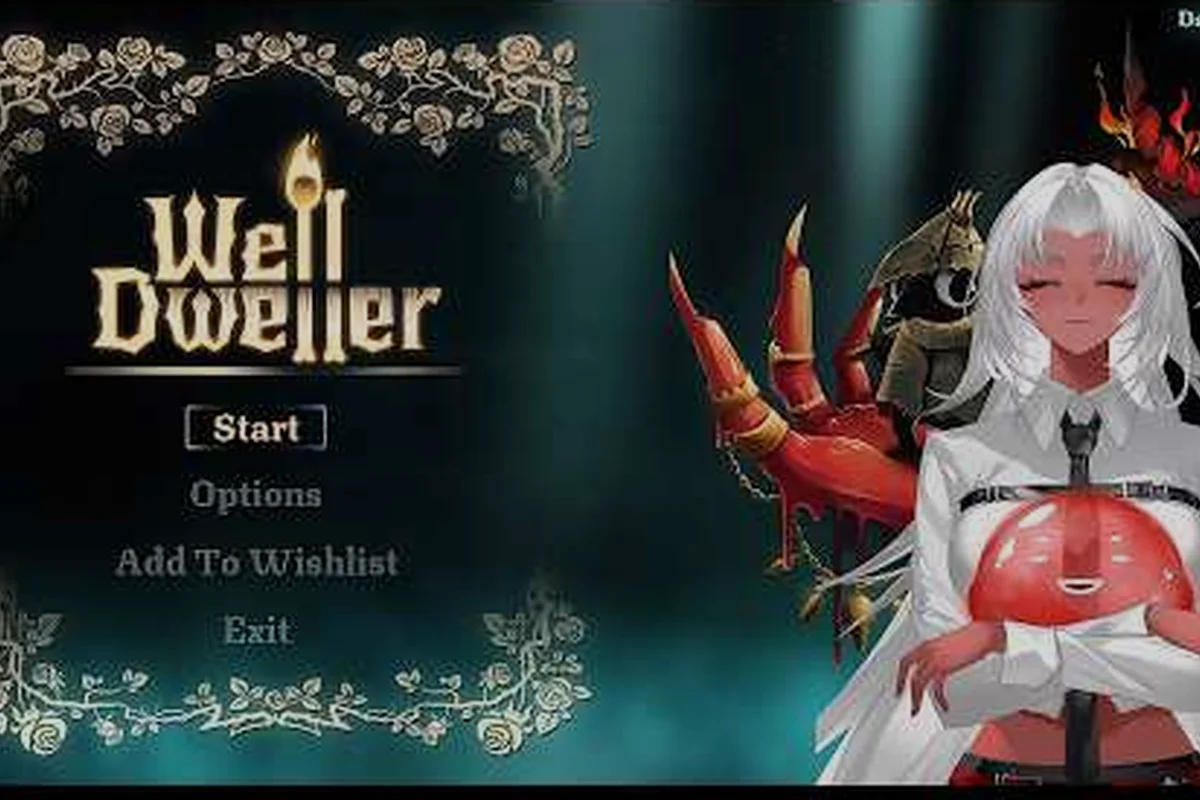
Comparing two metroidvania releases feels a lot like setting two candles side by side and squinting at the wax. Both burn, but the shape of the flame tells you almost everything. Well Dweller compared to Blasphemous keeps coming up in community threads because the two games flirt with the same gothic-fairy-tale atmosphere while running on completely different mechanical engines. If you're deciding where to spend your next ten hours, the answer depends on whether you want the punishing Catholic-horror gauntlet of the Guilt system or a gentler, bird-sized matchstick adventure that prizes charm over cruelty. This side-by-side walks through combat, tone, length, language support, and replay value so you can pick the right candle for the dark.
Core Identity: Candle, Matchstick, and Penitent One
Well Dweller puts you in the feathers of Glimmer, a tiny bird carrying a single matchstick through a decaying fairy-tale kingdom. The hook is environmental: the matchstick lights the dark, fuels combat, and opens up traversal. Light is a resource, a weapon, and a storytelling device in one. You collect 32 trinkets that mix-and-match into a build, befriend NPCs like Ilda the mouse, and chase a crazed hunter who took your siblings.
Blasphemous, by contrast, stars the Penitent One — a hooded executioner figure wrapped in Catholic iconography and bodily horror. The hook is also the Guilt system: every death leaves a statue behind filled with accumulated guilt, and cashing in that guilt is the only way to upgrade stats. Combat revolves around a Mea Culpa sword, rosary beads, prayers, and a brutally punitive world. Both games are 2D metroidvanias with strong artistic identity, but they target very different emotional registers.
| Element | Well Dweller | Blasphemous |
|---|---|---|
| Protagonist | Glimmer (bird with a matchstick) | Penitent One (masked executioner) |
| Core verb | Light, warm, befriend | Punish, suffer, atone |
| Visual tone | Storybook dark fantasy, hand-painted | Catholic horror, grotesque pixel art |
| Hub friendliness | High (camping, shops, kind NPCs) | Low (every NPC has a cost or curse) |
| Difficulty feel | Approachable with adjustable options | Deliberately punishing, high stakes |
Players coming from one to the other often note the temperature shift: Well Dweller is the cozy gothic cousin, while Blasphemous is the gothic cousin who makes you confess your sins before entering the room.
Combat Mechanics: Matchstick Sparks vs Mea Culpa Swings
Resource Loop
Well Dweller's matchstick loop is the heart of its combat. Striking enemies spends flame, dodging is free, and certain trinkets let you sustain or amplify that flame. The Dark Garden, an early boss and one of the 41 Steam achievements listed on the achievements tracker, sets the tone: learn the matchstick's rhythm, time your parry, and the world opens up. Trinket combinations are where the build identity lives — 32 collectible trinkets mean that two players can finish the game with completely different kits.
Blasphemous's resource loop is the Guilt system. Every death drops a Guilt Fragment, and if you die again before recovering it, the previous fragment turns into a guilt statue that deals damage on contact. Spending Guilt at the Elevated Confessor boosts your stats, which makes dying a real strategic cost. The Mea Culpa sword has combo strings, charged attacks, and ranged bursts, and rosary slots allow prayers and relics that alter the build. It's a heavier, more deliberate combat system.
| Mechanic | Well Dweller | Blasphemous |
|---|---|---|
| Main verb | Light, slash, parry | Slash, parry, pray |
| Resource | Matchstick flame | Guilt (from death) |
| Build system | 32 trinket slots, mix-and-match | Rosary beads, relics, prayers |
| Healing | Free, fairly generous | Bile flasks (limited per checkpoint) |
| Pacing | Agile, reposition-heavy | Heavier, punish-window focused |
Boss Pacing and Boss Characters
Boss pacing in Well Dweller is community-reported as friendlier than Blasphemous, with shorter attempts and clear parry tells. The Groundskeeper, the Lady of the Drains, and the swarm boss Buggy Business each test a different facet of the matchstick loop. Players chasing achievements like "Warming Up" (kill 100 enemies) often pick up boss patterns within a handful of tries.
Blasphemous bosses are the franchise's reputation: Ten Piedad, Esdras of the Anointed Legion, and the Sisters of the Profane all demand pattern memorization and precise execution. Casual players report 20–40 attempts on certain fights, while experienced metroidvania players tend to clear them in 3–8. The community generally rates Well Dweller as the more inviting boss loop, which matters for players with limited play sessions or anyone hunting achievements on handheld.
Tone, Storytelling, and World Feel
Blasphemous leans into visceral, transgressive horror. The world is called Cvstodia, the lore borrows directly from Spanish religious art, and almost every character you meet is suffering, lying, or worse. The Cherubs, the Saffron Wing, and the Our Lady of the Charred Visage create a dreamlike nightmare that you slowly piece together from item descriptions. It's an uncomfortable game on purpose, and that discomfort is part of its appeal.
Well Dweller uses a softer, storybook register. Glimmer's quest to rescue siblings from a crazed hunter reads more like a Grimm adaptation than a passion play. NPCs like Ilda the mouse and Looter the scavenger have personalities rather than pathologies, and camping with Ilda is an actual warm-fire moment in a cold world. The decay is still there, but it's treated as sad rather than horrifying. If you have a hard stop on body horror, Well Dweller is the gentler entry point.
| Story Element | Well Dweller | Blasphemous |
|---|---|---|
| Emotional register | Melancholy, hopeful | Traumatized, punitive |
| Religious imagery | Faint, fairy-tale-adjacent | Central, Catholic iconography |
| NPC arc resolution | Befriend, rescue, reunite | Suffer, confess, transcend |
| Endings | Multiple (save the family, reunite the flock) | One canonical + NG+ variant |
| Lore density | Light, environmental | Dense, item-text heavy |
Platforms, Languages, and Practical Features
Steam Cloud and Family Sharing
Well Dweller supports Steam Cloud saves, which is helpful if you bounce between desktop and a Steam Deck or another PC. The game's achievements track syncs through Steam, so progress survives reinstalls. Steam Cloud is on by default for the title, and there are 41 achievements tied to story pages, siblings, trinkets, and boss defeats, as listed on the Steam Community achievements page.
Blasphemous also supports Steam Cloud. Where the two diverge is around Family Sharing and account-level features. Well Dweller is a single-player-only title with no co-op or shared-progression mechanics, which means Steam Family Sharing is essentially a library-sharing tool rather than a co-op feature. Both games are tagged Single-player on Steam, and neither has online co-op or shared unlocks.
| Feature | Well Dweller | Blasphemous |
|---|---|---|
| Steam Cloud | Yes | Yes |
| Family Sharing | Library only (single-player) | Library only (single-player) |
| Achievements | 41 | ~50 across base + DLC |
| Online co-op | None | None |
| Cross-progression | No | No |
Well Dweller Supported Languages
Well Dweller's supported languages are still rolling out post-launch, and the official Steam page lists English interface and subtitles as the confirmed baseline, with several other languages promised. According to the official Well Dweller on Steam page, the launch window emphasizes English while localization expansions are tracked. Players needing other languages should check the latest community reports and patch notes before purchase.
Blasphemous launched with a wide language pack: English, Spanish, French, German, Italian, Portuguese, Russian, Japanese, Korean, Simplified Chinese, and Traditional Chinese, plus full audio in some. The Game Kitchen has been adding languages for years, and the current Steam listing reflects that long-term localization investment.
| Language Support | Well Dweller | Blasphemous |
|---|---|---|
| English | Yes | Yes |
| Spanish | TBD / partial | Yes (full) |
| French | TBD / partial | Yes |
| German | TBD / partial | Yes |
| Japanese | TBD / partial | Yes |
| Full audio track | No (planned) | Yes (English, Spanish) |
Controller and Switch / Handheld Performance
Well Dweller controller support on PC is standard: full Xbox, PlayStation, and Steam Input mapping out of the box. The game plays cleanly on Steam Deck Verified hardware, and the game's input layer is forgiving enough for handheld play sessions of 30–60 minutes.
Well Dweller handheld performance on the Switch and Switch 2 follows the same metroidvania playbook as the developer's earlier Islets and Crypt Custodian: locked 30 FPS in handheld mode on original Switch, with sharper resolution when docked. According to community reports one day after launch, the Switch build is stable with no major frame drops reported in the main story areas; combat-heavy sequences and dense trinket VFX are the most likely spots for occasional dips. Steam Deck performance, by contrast, comfortably holds 60 FPS at native resolution. If you have access to a Switch 2, the Switch 2 review preview posted by players in the Well Dweller Switch review guide notes a clean 60 FPS handheld experience with the higher-resolution screen making the hand-painted art pop.
Blasphemous, originally released in 2019, runs at 60 FPS on most modern hardware, including Switch handheld at a slightly softer resolution. Both games feel at home on a controller, and both are well-suited to handheld play.
| Platform Note | Well Dweller | Blasphemous |
|---|---|---|
| PC controller support | Full, Steam Input | Full, Steam Input |
| Switch handheld FPS | ~30 FPS (orig), 60 FPS (Switch 2) | 30 FPS original / 60 FPS later patches |
| Steam Deck | Verified (or near-verified) | Verified |
| Resolution in handheld | 720p orig Switch | 720p Switch |
| Load times | Fast (modern engine) | Moderate (older engine) |
Length, Replay Value, and NG+ Content
Well Dweller is, by community report and the how long to beat guide, a tighter experience. Main story clears sit in the 10–15 hour range, with 100% completion (all 32 trinkets, all 41 achievements, all spirits, all siblings) landing closer to 20–25 hours. The route is well-supported by community resources: GabeAndTheGoat's 100% walkthrough and GG's interactive map both cover every collectible in a single playthrough.
Blasphemous's base game sits closer to 18–25 hours for a main clear, and completionist runs with all DLC (The Stir of Dawn, Wounds of Eventide, etc.) push past 35 hours. New Game+ in Blasphemous carries over upgraded stats and adds harder enemy placements, but it's still a single canonical ending plus a single NG+ variant.
| Length / Replay | Well Dweller | Blasphemous |
|---|---|---|
| Main story | 10–15 hours | 18–25 hours |
| 100% completion | 20–25 hours | 30–40+ hours with DLC |
| Multiple endings | Yes (save the family, reunite the flock) | No (one canonical + NG+) |
| NG+ mode | Reported, with carryover | Yes, with carryover |
| DLC footprint | None yet at launch | Substantial (3 expansions) |
| Speedrun appeal | High, single-route | High, established routes |
The endings question is the one players most often bring to the ending comparison guide: Well Dweller's branching endings (the Save the Family ending versus the Reunite the Flock ending) are part of its replay value proposition, and NG+ is reported to unlock additional post-ending content. Blasphemous sticks to a single, emotionally resolved ending, with NG+ focused on harder combat rather than narrative replay.
Which Game Should You Buy First?
If you're choosing strictly on emotional fit, the rule of thumb community reviewers keep landing on is simple: pick Well Dweller if you want a warmer metroidvania with approachable combat and multiple endings; pick Blasphemous if you want a punishing horror-tinged challenge with deep lore and large DLC value. Neither game does the other better — they target different moods, and both are well-regarded within their lane.
If you're choosing on price and feature parity, Well Dweller launched on September 22, 2026 at $19.99 with a 15% launch discount through October 6, bringing it to $16.99. Blasphemous has been on sale dozens of times and routinely dips below $10 for the base game. For a budget-conscious player building a metroidvania library, Blasphemous has the better long-term value, especially with DLC bundles.
If you want shorter sessions and a friendlier handheld experience, Well Dweller wins. If you want a longer world to lose yourself in and don't mind body horror, Blasphemous wins. Both are excellent. The candle and the matchstick both light the dark; you just have to decide which flame you want to carry.
Frequently Asked Questions
Is Well Dweller harder or easier than Blasphemous?
Well Dweller is generally reported as easier than Blasphemous, especially in boss pacing. The matchstick combat loop is forgiving, healing is generous, and trinket combinations let you build defensive or sustain-heavy kits. Blasphemous's Guilt system punishes every death with a guilt statue, bile flasks are limited, and several bosses demand 20+ attempts. Players who want a smoother first run will likely find Well Dweller more welcoming.
Does Well Dweller have multiple endings like Blasphemous?
Yes, Well Dweller has multiple endings, while Blasphemous has only one canonical ending. Well Dweller's two main branches are the Save the Family ending and the Reunite the Flock ending, both tied to which siblings and spirits you prioritize before the queen's quarters. Blasphemous concentrates its narrative weight into a single resolution, with NG+ offering harder combat rather than alternate story outcomes. Players who value narrative replay will find Well Dweller more rewarding.
Will Blasphemous fans enjoy Well Dweller?
Most Blasphemous fans tend to enjoy Well Dweller, but the temperature shift is real. Well Dweller is warmer, kinder to NPCs, and lighter on religious imagery, so fans who specifically love Blasphemous's transgressive horror might find Well Dweller a bit too gentle. Fans who love the metroidvania flow, the hand-painted art, and the trinket-driven build variety tend to take to Well Dweller immediately. The Noisy Pixel review of Well Dweller compares its flow favorably to other indie metroidvanias, and longtime Blasphemous players report a smooth transition in either direction.
What languages does Well Dweller support at launch?
Well Dweller launches with English confirmed, with additional language support tracked in patch notes after release. Blasphemous, by contrast, ships with a wide localization pack including English, Spanish, French, German, Italian, Portuguese, Russian, Japanese, Korean, Simplified Chinese, and Traditional Chinese, plus full audio in some languages. Players who need a non-English interface should check the latest Steam page for the current supported languages list before purchase.